Meet the team

Francis Bunker is director of his own company, Marine Seen, which he has run successfully for the last 20 years and has over 30 years experience. Francis specialises in marine biology and taxonomy desk studies and fieldwork including still and video photography. Expertise is offered in data mining, project scoping and design for both intertidal and subtidal environments.
He has taken part in biological monitoring programmes in marine conservation areas (including SAC’s) around Scotland, England, Wales and Ireland and contributed to a number of methodological trials. In particular, he was involved in the early development of biotope mapping methodologies, both intertidal and subtidal. He is first author of the JNCC guidelines on shore biotope mapping methodology and on the use of drop down video for monitoring.
Francis has particular taxonomic expertise with the algae; writing and contributing to a number of scientific publications, including the Seasearch Guide to Seaweeds and is a member of the British Phycological Society Conservation Committee.
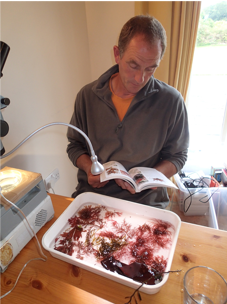
Tom Mercer established his own consultancy – Aquatic Environments, whilst working at Durham University. Tom carries out surveys in both the marine and freshwater environments for a wide range of public and private sector clients. Whilst concentrating on surveys of seabed flora and fauna, both epibenthic and infaunal, he is also an all-round naturalist, with experience and training in surveys of seabirds, cetaceans and aspects of freshwater fauna (in particular white-clawed crayfish & fish population studies using electro-fishing techniques).
In the marine environments he has particular expertise in the analysis of sediment macrofauna samples and has worked on offshore, nearshore and intertidal macrobenthic samples from all around the British Isles. He has Client Rep’ experience of environmental surveys in the North Sea, North-western Atlantic and the Black Sea and has also lead numerous environmental surveys to offshore oil and gas fields and their pipeline routes. He acted as an independent external taxonomic auditor to (Thompson-) Unicomarine Ltd. When they ran the benthic infaunal component of the National Marine Biological Analytical Quality Control (NMBAQC) Scheme.
He has coordinated and assisted with intertidal and subtidal surveys and monitoring programmes in many locations around the UK and Europe; as part of marine nature conservation projects, environmental impact assessments and statutory environmental monitoring programmes. He is familiar with many in situand remote survey methodologies and he owns and operates an HD drop-down digital video system. He also has considerable experience in teaching field courses in marine biology and ecology.
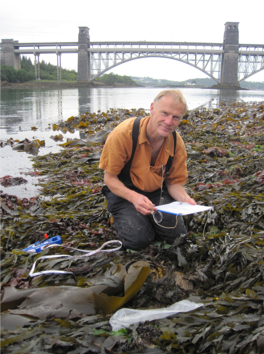
Jon Moore established his own environmental consultancy business: Coastal Assessment, Liaison & Monitoring (CALM). He has a wide range of skills, with an emphasis on marine and coastal surveys and assessment, environmental assessment, marine pollution monitoring, oil spill response and planning and marine nature conservation.
He has considerable experience and interest in the design of marine ecological surveys and monitoring programmes and provides expert advice to a variety of statutory and non-statutory organisations. He has carried out and managed many such surveys around the UK and overseas, using diving, remote sampling and shore based techniques. He is skilled in the identification of marine invertebrates (in situ and in the laboratory) from all habitats.
Jon has particular experience in the effects of oil industry activity on marine ecosystems, including oil spills and coastal and offshore discharges. He provides advice on the impacts of oil spills and oil spill clean-up methodology and on contingency planning for oil spills. He has developed oil spill sensitivity maps, clean-up guidelines and environmental reviews for many coastal areas of the UK and overseas.
He is an experienced lecturer and has run training courses on marine ecology and on many aspects of oil spills in the UK and overseas. He has published more than 40 papers and produced over 200 consultancy reports.